
Introduction
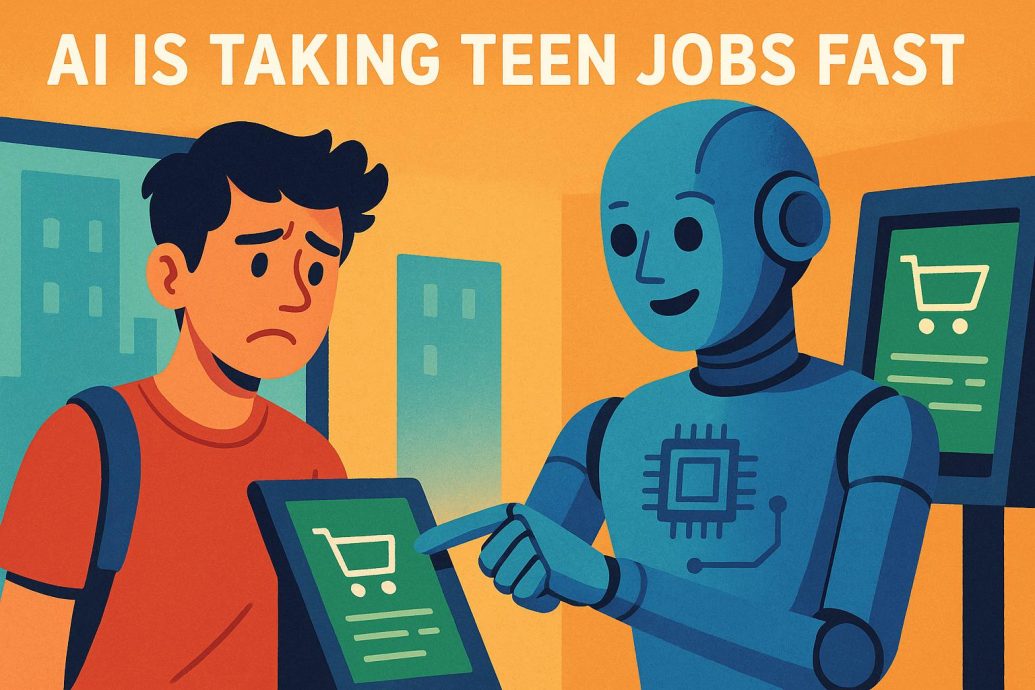
AI is taking teen jobs fast, and the impact goes much deeper than many realize. Across fast food counters, retail floors, and delivery routes, automation is transforming entry-level job opportunities that once served as essential stepping stones for young workers entering the job market. While technological progress continues unhindered, it brings real social and economic consequences, particularly for the newest generation stepping into the workforce. As kiosks and robots replace human roles, schools, parents, and policymakers must react quickly to support teens navigating a dramatically altered employment landscape.
Key Takeaways
- AI and automation technologies are rapidly eliminating traditional teen jobs in fast food, retail, and logistics.
- Teen labor force participation has dropped significantly, reaching its lowest rate in a decade according to data from the Bureau of Labor Statistics.
- Schools and governments are introducing job-readiness programs and skill development tracks in response to the changing workforce.
- This shift has long-term implications for economic mobility and early career development for Gen Z.
The Decline of Traditional Teen Jobs
Historically, teenage workers occupied roles that required minimal training and offered flexible hours. In the early 2000s, about 50 percent of teens aged 16 to 19 held a summer job. By 2023, the number had fallen below 33 percent according to the U.S. Bureau of Labor Statistics. While academic pressures and extracurricular commitments play a part, the overwhelming influence comes from technological disruption. Cashier-less systems, advanced ordering kiosks, warehouse automation, and drone deliveries are beginning to take over tasks previously held by teenagers.
Industries Most Affected by Youth Workforce Automation
Retail and food services remain the most affected as they are under constant pressure to lower labor costs and boost efficiency. This makes them ripe for widespread adoption of AI systems.
- Fast Food: Chains like McDonald’s, Wendy’s, and Taco Bell have installed self-ordering kiosks that reduce the need for front-counter staff. Some kitchens are beginning to use robots to fry food or grill burgers with consistent accuracy.
- Retail: Companies such as Walmart and Kroger are rapidly expanding their self-checkout options. Amazon Go stores have removed cashiers entirely, relying on sensors and AI to manage purchases.
- Delivery Services: The introduction of autonomous vehicles and sidewalk delivery bots is phasing out human workers, a trend that hits teen gig workers especially hard.
These changes are making it harder for teens to find employment in industries that once offered critical early work experience. Companies are choosing automation over human labor since machines do not require breaks, raises, or time off.
Teen Unemployment Trends in the AI Era
The early 2020s are ushering in a new dimension of youth unemployment. Although teen joblessness fluctuates with broader economic conditions, technology is now a major driver of job scarcity. Labor force participation among 16 to 19-year-olds has dropped nearly 20 percent since 2000, according to Pew Research Center. Teens are increasingly pitted not against adults but against AI-driven systems.
Labor economist Robert Williams from the University of Michigan explains that today’s teens find themselves unprepared for modern workplaces that integrate AI while still lacking the experience to compete effectively. He highlights that this may reduce their long-term income potential and limit career development prospects.
Human Stories Behind the Statistics
Jamie Matthews, a 16-year-old from Denver, recently lost hours at her fast food job after her employer installed touchscreen ordering kiosks. She shared, “They said fewer cashiers were needed. Because I was newer, I was one of the first cut.” This story reflects the disruption happening across communities. According to a report on how robots are taking our jobs, young people without access to resources for retraining are feeling the greatest impact.
Teens from low-income backgrounds are particularly vulnerable, often relying on summer employment to contribute to household expenses or save for college. This shift could increase already existing inequalities in access to future career opportunities.
Global Comparison: AI’s Impact on Teen Jobs Beyond the U.S.
Though the U.S. is a leader in AI deployment, the effect on teen employment is noticeable in other countries too. In Japan, companies like FamilyMart are testing robotic shelf-stockers to reduce the need for part-time staff. In the United Kingdom, expanded use of self-checkouts in stores such as Tesco has coincided with drops in teen participation in part-time retail work. OECD data shows widespread declines in youth employment across developed countries that align with rising automation investments.
Labor market analyst Lena Roche from the OECD notes that entry-level positions for youth are vanishing across the world. This results from structural employment changes rather than localized policies or education gaps.
How Schools and Governments Are Responding
Recognizing the urgency, local and national institutions are revising education and training methods to prepare teens for an AI-integrated economy. Several initiatives are gaining momentum:
- STEM Education: Schools are embedding coding, robotics, and AI topics into earlier grade levels. After-school clubs and weekend boot camps offer additional exposure.
- Micro-Internships: Pilot programs in states like Illinois and Washington provide students with short-term project work in fields that blend tech with interpersonal skills.
- Federal Programs: Different initiatives under the Workforce Innovation and Opportunity Act support youth with technical training and mentorship.
- CTE Pathways: Career-based programs in Texas and Michigan are aligning high school curriculums with real-world needs such as automation support, cybersecurity, and data handling.
Preparing Teens for an AI-Driven Future
The erosion of traditional jobs does not equate to diminished opportunity. Many teens are tapping into the digital landscape, earning money as freelancers, video editors, social media managers, or remote tech assistants. Platforms like Fiverr and Upwork show growing numbers of teen users applying their digital fluency in paid gigs.
To thrive in this evolving environment, young people should consider action steps such as:
- Signing up for free courses on platforms like Coursera or Khan Academy focused on AI and programming
- Attending school or community-run technology workshops
- Participating in youth entrepreneurship programs including Junior Achievement
- Exploring hands-on internships in tech-driven companies or digital media outlets
This transition requires a shift in perspective. The goal should no longer be merely to find any job, but to build future-proof career skills that resist automation.
Macroeconomic and Social Implications
Teen employment plays a larger role in economic stability than it may appear on the surface. Early work experience often leads to higher earnings decades later. Researchers at Georgetown University found that working before age 20 significantly increases the chance of stable employment by age 30. Missing out on these early opportunities also means missing out on soft skills like communication, punctuality, and adaptability.
There are also widening gaps between socioeconomic groups. Teens from wealthy families often use their networks to secure internships or flexible learning opportunities. Teens from working-class backgrounds may find few or no options at all. Without action, these disparities could solidify into generational stagnation and lack of upward mobility.
FAQs
How is AI affecting teenage employment?
AI is reducing the number of available jobs typically filled by teens, such as positions in fast food, retail, and delivery services. These roles are increasingly automated through kiosks, robots, and software systems.
What jobs are being replaced by automation?
Common teenage positions like cashiers, clerks, and delivery helpers are being phased out in favor of self-service technology and machine-led logistics.
Why are fewer teens working today?
Part of the decline is due to increased academic and extracurricular commitments. Still, a significant factor is employers relying more on automation to reduce costs, eliminating many traditional teenage roles.
How are schools preparing students for AI-driven job markets?
Schools are integrating more STEM instruction, offering technical boot camps, and focusing on projects that improve both soft and digital skills. Many are creating partnerships with local industries to prepare students for AI-integrated environments.
To better understand when and how AI might alter job markets further, check out this guide on whether a robot could take your job.